
The Meyer-Näkel Sisters - Setting the Benchmark for Sensational Spätburgunders
In the dramatic Ahr valley, where slate-rich slopes line the river, one winery has quietly shaped the narrative of German red wine excellence for generations - Meyer-Näkel. Renowned for producing some of the country’s finest Spätburgunder - Germany’s elegant answer to Pinot Noir- this fifth-generation family estate is now led by sisters Meike and Dörte Näkel (pictured above) - yet its rise to prominence is inseparable from the vision and determination of their father, Werner Näkel.
When Werner Näkel took over the family estate in 1982 at just 29 years old, the reputation of Ahr wines was far from distinguished. Light, simple wines dominated the market, and few producers dared to challenge convention. Werner, originally a high school teacher and something of an outsider to the wine world, chose a radically different path. Rather than chasing trends, he looked backwards - reviving the methods of his grandparents. He championed long maceration periods and ageing in small oak barrels, techniques that emphasised structure, depth and longevity.

His bold approach gained recognition, as he was awarded the German Red Wine Prize for his 1987 Pinot Noir. Accolades from leading wine guides such as Eichelmann and Gault Millau soon followed, and Werner Näkel’s distinctive style played a pivotal role in elevating the international standing of German red wines. What had once been an overlooked region began to command serious attention.
Today, that legacy is in the hands of the next generation. For over a decade, Meike and Dörte Näkel have independently guided the estate, combining inherited expertise with a forward-thinking mindset. Their stewardship, however, has not been without challenge. In 2021, the devastating Ahr valley floods of 2021 struck the region, destroying three hectares of vineyards and wiping out essential equipment. The impact was profound.
Yet resilience has become as much a part of the Meyer-Näkel story as innovation. The sisters not only rebuilt but reimagined the winery, consolidating previously scattered cellars into a single, modern facility. Although production has decreased by around 30 percent since the disaster, the renewed focus on quality over quantity has only strengthened their commitment to excellence.
Their work has not gone unnoticed. British wine authority Jancis Robinson remarked that, “I would not be exaggerating to say that Meyer-Näkel makes some of the most outstanding Spätburgunder in Germany.”

From Werner Näkel’s quiet revolution in the 1980s to the resilience and innovation of Meike and Dörte today, Meyer-Näkel embodies the evolution of German red wine. Rooted in the unique terroir of the Ahr Valley and guided by a clear, sustainable vision, this family estate continues not only to honour its past - but to shape the future of Spätburgunder.
The WineBarn are delighted to have been importing Meyer-Näkel's wines to UK for over 20 years, and would like to recommend two of our favourites...
2022 Dernauer Pfarrwingert Spätburgunder Grand Cru dry
Among their standout wines, the Meyer-Näkel 2022 Dernauer Pfarrwingert Spätburgunder Grand Cru dry is nothing short of exceptional. Awarded an impressive 98 points by Decanter, this wine captures the essence of its unique vineyard site in Dernau. Here, a favourable southern exposure and a warm microclimate combine with greywacke and slate soils to produce a wine of remarkable depth and finesse. Aromas of wild red berries, blueberries and cherries are layered with herbal spice, delicate roasted notes and violets. On the palate, it reveals a vibrant freshness, pronounced minerality and a silky tannin structure that lingers long after each sip - an exquisite example of Spätburgunder at its most refined.

2022 Illusion Spätburgunder Blanc de Noir
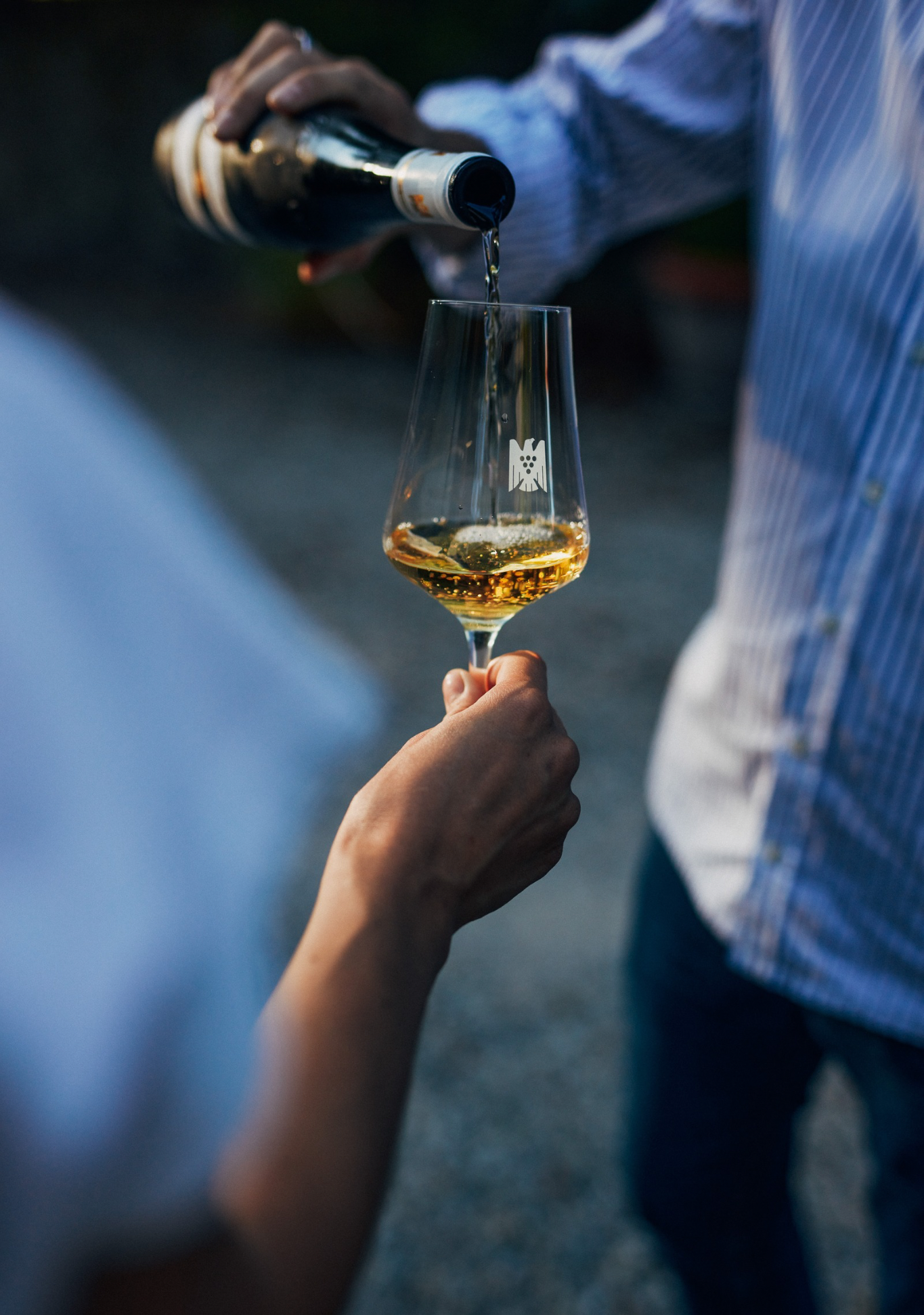
Equally intriguing, is the Meyer-Näkel 2022 Illusion Spätburgunder Blanc de Noir. Scoring 87 points from Decanter, this wine offers a distinct twist because it is a white wine produced from red grapes. Known in France as Blanc de Noir, it displays a bouquet reminiscent of Pinot Blanc, with creamy notes of apple, pear, peach and melon, accented by hints of citrus. Wine writer Tamlyn Currin evocatively describes its profile as “peach skin and nuts… white pepper, grapefruit, crab apple,” highlighting its elegance and layered complexity. Soft yet lively, it unfolds with a refined acidity that makes it both sophisticated and refreshing.